Discover and integrate MCP servers to extend Claude's capabilities
Local MCP server implementation for Starwind UI that you can use with Cursor, Windsurf, and other AI tools
A Model Context Protocol (MCP) server that enables secure terminal command execution, directory navigation, and file system operations through a standardized interface.
MCP server for Todoist integration enabling natural language task management with Claude
MCP Server to integrate Unity Editor game engine with different AI Model clients (e.g. Claude Desktop, Windsurf, Cursor)
WildFly MCP server and other tooling to integrate WildFly in AI space
An MCP server implementation that integrates the Brave Search API, providing both web and local search capabilities.
Wanaku MCP Router
A mcp server for tracking cryptocurrency whale transactions.
A server implementation for Wikidata API using the Model Context Protocol (MCP).
Model Context Protocol server for secure command-line interactions on Windows systems
An implementation of the Model Context Protocol for the World Bank open data API
MCP tool for building Xcode iOS workspace/project and feeding back error to LLMs.
MCP Server for YouTube API, enabling video management, Shorts creation, and advanced analytics
An MCP server implementation for retrieving information from the AWS Knowledge Base using the Bedrock Agent Runtime.
This MCP server attempts to exercise all the features of the MCP protocol. It is not intended to be a useful server, but rather a test server for builders of MCP clients. It implements prompts, tools, resources, sampling, and more to showcase MCP capabilities.
A Ticketmaster MCP server that provides query capabilites from the Discovery API
A Model Context Protocol server allows to interact with Twitter, enabling posting tweets and searching Twitter.
A Model Context Protocol server allows Clients to interact with Xero
A Model Context Protocol (MCP) server that enables natural language queries to databases
Tools for seamless integration of different systems and services.
Cloud infrastructure and deployment management tools.
AI-powered tools for creative design workflows across 3D and 2D mediums.
AI-powered tools for product development, design review, and performance monitoring.
Tools for monitoring, analytics, and operational efficiency.
Explore Claude Cowork, Anthropic's groundbreaking AI agent built on Claude Code foundations. Discover how it enables file access, document creation, and task automation for everyone—not just developers. Learn how it integrates with MCP servers and extends Claude Code capabilities.
Explore the major [Claude code](https://claudecode.app) 2.1.1 update featuring 109 CLI improvements, automatic hot reload for skills, sub-agent execution, enhanced security, performance optimizations, and smarter prompt behavior. Learn about all the new features and improvements.
Master the art of prompting Claude with Anthropic official guide. Learn 10 proven strategies to 10x your Claude Opus and Sonnet 4.5 performance. Discover how better prompts lead to better results with practical examples and real-world applications.
Deep dive into sophisticated SSH workflows for Claude Code power users. Learn zero-friction authentication, session management, and advanced techniques that transform your vibe coding experience.
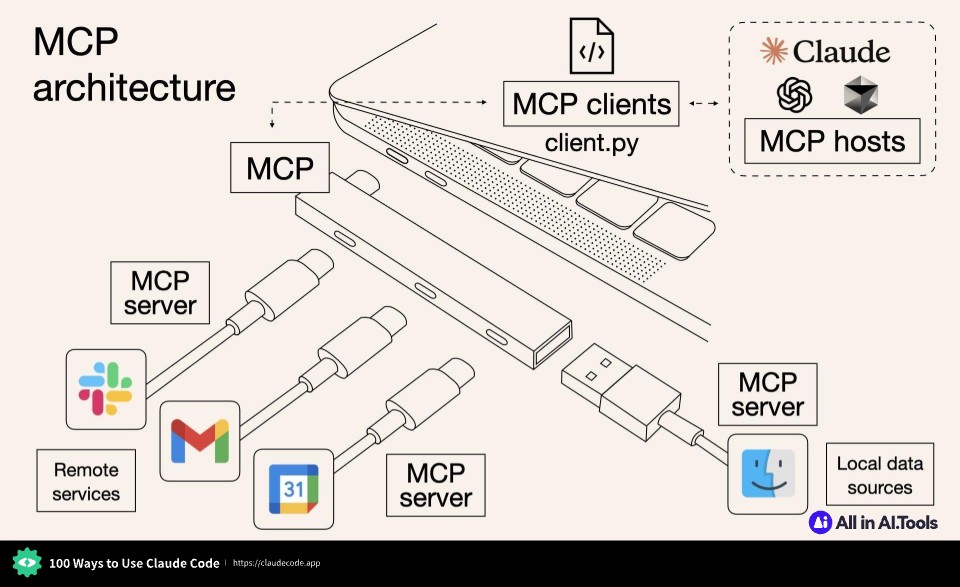
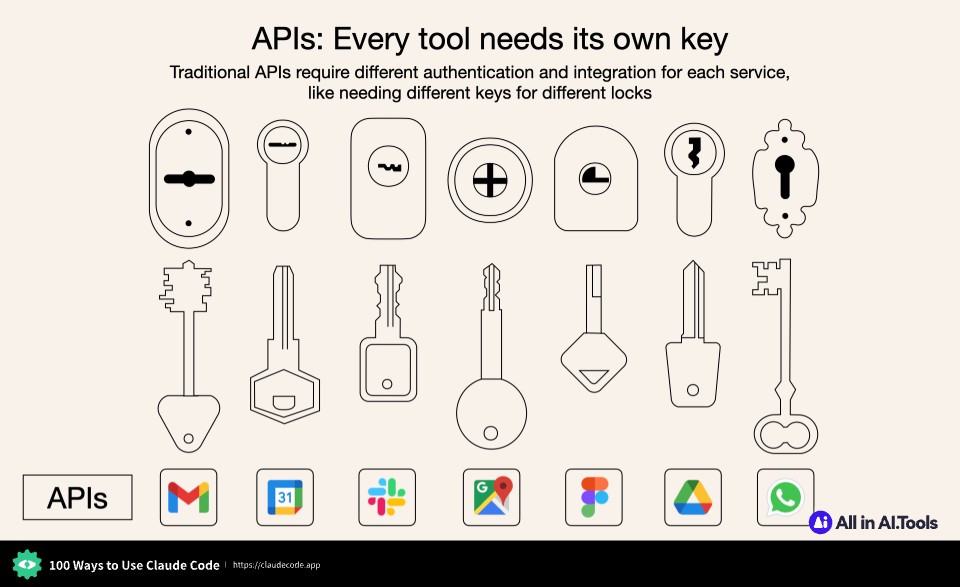
MCP (Model Context Protocol) is an open protocol that standardizes how applications provide context to LLMs. Think of MCP like a USB-C port for AI applications, providing a standardized way to connect AI models to different data sources and tools.
MCP Servers are lightweight programs that expose specific capabilities through the standardized Model Context Protocol. They act as bridges between LLMs like Claude and various data sources or services, allowing secure access to files, databases, APIs, and other resources.
MCP Servers follow a client-server architecture where a host application (like Claude Desktop) connects to multiple servers. Each server provides specific functionality through standardized endpoints and protocols, enabling Claude to access data and perform actions through the standardized protocol.
Yes, MCP Servers are designed with security in mind. They run locally with explicit configuration and permissions, require user approval for actions, and include built-in security features to prevent unauthorized access and ensure data privacy.



